


The Historic Working Boat at the Heart of Best Yorkshire Boating
Apollo isn’t a replica, and she’s not a modern boat dressed up to look old - she’s the real thing.
Built in 1929, with a carrying capacity of 25–35 tons, Apollo began life as a working cargo boat on the industrial canals that once powered Britain. Today, nearly a century later, she’s still travelling the waterways – not with coal or cargo, but with guests discovering Yorkshire from the water in a way that’s relaxed, hands-on, and full of character.
When you step aboard Apollo with Best Yorkshire Boating, you’re stepping onto a genuine piece of canal history that’s still doing what she was built to do: travel slowly, carry stories, and connect people to the waterways.


Built for a Working Life
Apollo was built at Saltney Dock near Chester for Midlands & Coast Canal Carriers. She was constructed in traditional canal-boat style, with iron sides and a timber bottom, designed to carry heavy loads through narrow locks and shallow channels.
In her early years, she was horse drawn, travelling between Ellesmere Port and Wolverhampton carrying goods that kept factories running and towns supplied. Life on board would have been busy, physical, and closely tied to the rhythm of the canal.
In 1936, Apollo was converted into a motor boat and fitted with an engine, marking the start of a new chapter in her working life.
Coal, Towing, and Tough Canal Work
After the Second World War, Apollo worked for Ernest Thomas (Walsall) Ltd, carrying coal through the Black Country. She often travelled with a butty boat alongside and was part of the everyday movement of fuel that powered local industry.
In 1951, she was shortened and turned into a canal tug, helping move other boats and even breaking ice during harsh winters. Like many working boats, she adapted to whatever job the waterways needed her to do.
By the time commercial carrying declined, Apollo had already had decades of hard service — but her story wasn’t over.


A Second Life on the Water
In 1970, Apollo was given a new role as a passenger boat with Apollo Cruisers, on the Leeds & Liverpool Canal, introducing generations of people to the canals with a passenger capacity of up to 48. This chapter helped ensure she was cared for and maintained, including a new steel bottom fitted in 1989 to keep her strong for the future.

Restored to Her Working Roots
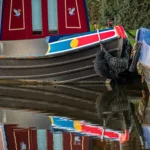
More recently, Apollo has been carefully restored to reflect her appearance as a 1950s working narrowboat. Her passenger fittings were removed, her structure strengthened, and she was repainted in the traditional colours of Ernest Thomas (Walsall) Ltd, one of her historic owners.
The result is the Apollo you see today – a boat that looks and feels like a true working craft, while still being ready to welcome guests aboard.
Apollo Today – Exploring Yorkshire with You On Board
Now cruising with Best Yorkshire Boating, Apollo has started another new chapter — sharing Yorkshire’s waterways through hands-on heritage trips.
She moves at the proper canal pace: unhurried, close to the water, and full of small details you’d miss any other way. From the solid feel of the tiller to the sound of water along the hull, Apollo offers an experience that’s authentic without being formal, historic without being stuck in the past.
You don’t have to just sit back and watch the scenery (though there’s plenty of that). If you’d like to, you can: ⚓ Have a go at steering 🔐 Help work a lock 📖 Hear the stories of the canals and the people who worked them
It’s canal heritage brought to life — friendly, welcoming, and shared at a relaxed Yorkshire pace.
A Living Piece of Canal History
Apollo has carried coal, towed boats, broken ice, hosted passengers, and travelled hundreds of miles of waterways over nearly 100 years. Today, she carries something just as important: the chance for people to connect with Yorkshire’s canals in a real and memorable way.
When you come aboard Apollo, you’re not just taking a trip – you’re helping keep a working boat working.
Climb aboard, take the tiller, and see Yorkshire the traditional way – from the water.